Houston bathrooms have a problem. Most of them look exactly the same as they did in 2009.
Beige walls, basic subway tile, a garden tub that nobody uses, and a floor that has seen better days. It is not that homeowners do not care. It is that bathrooms feel overwhelming to update, and the design world moves fast. What looked fresh five years ago can feel dated before you have even paid off the renovation.
The good news is that 2026 is a great time to remodel a Houston bathroom. The tile trends right now reward bold choices without requiring you to blow the budget, and several of them are genuinely well-suited to our climate, our humidity, and the way Gulf Coast homeowners actually live.
Here is what is working in Houston bathrooms right now — and how to make it work in yours.
Before getting into specific trends, it helps to understand why tile selection in Houston is a little different than it is in other markets.
Houston humidity averages around 75 percent and spikes much higher in summer. Tile grout absorbs moisture. Certain finishes show water spots and mineral deposits much faster in hard-water areas like ours. And because Houston homes are often on slab foundations that shift seasonally, large-format tiles require proper substrate prep to avoid cracking.
None of this means you should play it safe and stick with whatever was in the builder’s catalog. It means the finish, grout choice, and installation matter as much as the tile itself.
A beautifully chosen tile installed poorly on a wet Houston morning will look terrible in two years. Installed correctly, it will still look sharp when you sell the house. Our bathroom tile flooring service covers every step from substrate inspection to final sealing — because the work underneath the tile is what determines how long it lasts.
The shift from 12×12 to 24×24 and larger has been building for years, and it is not slowing down. Large-format porcelain tiles — 24×48 is now common, and 48×48 is appearing in high-end projects — create a cleaner, more seamless look that makes bathrooms feel larger than they are.
For Houston homes, large-format porcelain is practical as well as attractive. Fewer grout lines mean less surface area for mold and mildew to take hold. Porcelain absorbs almost no moisture, which matters when your bathroom runs humid half the year.
The trade-off is installation. Large-format tiles require a perfectly level substrate, proper back-buttering technique, and adequate curing time. This is not a weekend DIY project in a Houston bathroom. Our bathroom remodeling team handles the substrate work first — because skipping that step is exactly what causes large-format tiles to crack inside two years.
The cool gray palette that dominated bathrooms for the better part of a decade is giving way to warmer tones. Warm whites, sandy beiges, creamy off-whites, and soft taupes are appearing in more remodels, and they are working particularly well in Houston homes.
Part of the reason is practical. Houston interiors tend to get a lot of natural light, and warm neutrals respond better to that light than cool grays, which can look washed out or dingy depending on the time of day.
The other reason is longevity. Warm neutrals have proven staying power. They look current now and they will not look dated in seven years.
If your bathroom currently has a heavy gray tile, swapping out the paint color and accessories can shift the feel without a full demo. But if you are doing a full remodel, warm porcelain or natural stone tones are the right long-term move. Our bathroom countertops page shows how warm tile pairs with the right vanity surfaces for a finished, cohesive look.
Glossy tile had a good run. It is practical, easy to clean, and reflects light well. It is also showing up in a lot of outdated bathrooms, which is making homeowners more cautious about it.
Matte and textured finishes — linen-look porcelain, honed natural stone, pressed concrete looks — are getting more attention in 2026 remodels. They hide water spots better, which is a real benefit in a city where mineral-heavy water leaves marks on everything. They also photograph better, which matters if you ever plan to sell.
The one practical note: textured tile on shower floors requires more diligence with cleaning. Grout lines and surface texture trap soap residue. Sealed properly and cleaned regularly, it is not a problem. Just know what you are getting into before you choose a deeply textured floor tile for a shower that sees heavy daily use.
The days of matching tile floor-to-ceiling throughout are fading. What is replacing it is a more intentional approach: a clean neutral field tile for the main surfaces, and one wall or area treated as a feature.
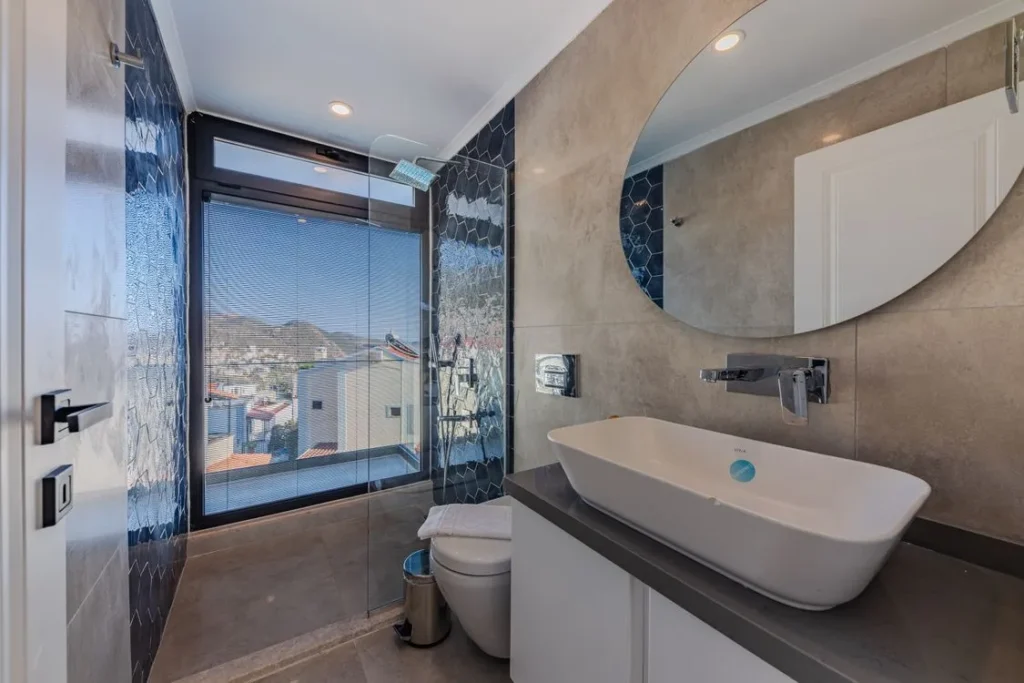
This might be a floor-to-ceiling zellige-style tile behind a freestanding tub. A bold geometric pattern inside a walk-in shower niche. Or a contrasting tile on the shower floor that anchors the whole design.
This approach gives a bathroom a high-end, designed look without the cost of doing something bold on every surface. It also makes updates easier — changing out an accent wall is a fraction of the cost of redoing an entire bathroom. If you are still deciding between a walk-in shower setup or keeping a tub, our guide to walk-in showers vs. tub-shower combos covers that decision in detail so you are not making it on the fly during demo.
Patterned floor tile — whether that is classic encaustic cement-look tile, Moroccan-inspired shapes, or graphic hexagons — is one of the more personal design choices a homeowner can make. Done well, it is a bathroom detail that people remember.
The key in Houston is using porcelain versions of these patterns rather than natural cement tile, which requires significant sealing and maintenance in humid climates. Modern porcelain can reproduce the look of encaustic cement tile perfectly, with a fraction of the maintenance. Take a look at our bathroom gallery to see how patterned floors have come together in recent Houston projects.
Scale matters too. A pattern that looks great in a magazine photo can feel overwhelming in a small guest bath. We typically recommend starting with a smaller-scale pattern for rooms under 60 square feet, or using the pattern as an inset rather than across the entire floor.
Marble, travertine, and slate have always been popular bathroom materials. They are also expensive, porous, and require maintenance that most Houston homeowners do not want to deal with.
Porcelain tile technology has gotten remarkably good at reproducing the look of natural stone. Veined white porcelain that reads like Carrara marble, warm travertine-look tiles with realistic variation, slate-look tiles with genuine texture — these are now standard offerings from major manufacturers. Our bathroom tile flooring page covers the full range of materials we work with, from basic ceramic to premium porcelain and natural stone for those who want the real thing.
For Houston bathrooms, the case for high-quality porcelain over natural stone is practical: it handles humidity without sealing, it does not stain from products left on the counter, and it cleans easily. The visual result is nearly indistinguishable from the real thing.
A question we hear often during bathroom consultations is how to combine these trends without the result feeling incoherent. A few combinations that are working well in Houston remodels right now:
Warm white large-format floor + matte zellige-look accent wall + brass fixtures. Clean and warm, with one moment of texture that gives the room personality.
Patterned cement-look floor + simple subway wall tile + matte black hardware. The pattern does the work, and the simpler wall tile keeps it from being too busy.
Honed travertine-look porcelain throughout + contrasting dark grout. Grout color is one of the most underrated design tools in a bathroom. Dark grout on a light tile creates grid lines that read as intentional pattern.
Browse our bathroom gallery to see these combinations in real Houston homes before committing to one direction.
Not every trend translates to the Gulf Coast. A few things to skip or approach carefully:
Unsealed natural stone floors. Travertine, marble, and limestone are porous. Houston shower steam and humidity will cause staining, etching, and biological growth without rigorous maintenance. Use the porcelain look-alike instead.
White grout in high-traffic showers. White grout shows mold and mildew faster in our climate than anywhere else. Opt for gray, greige, or charcoal grout in shower areas.
Overly trendy accent tile. Tile is expensive to change. Some statement tile trends have a short shelf life. If you want something bold, choose a pattern or color with actual design history behind it rather than something that appeared on social media six months ago.
Too much contrast in a small bathroom. Dark tile on all surfaces can look dramatic in a large master bath and oppressive in a small guest bath. Account for the room size and natural light before committing to a dramatic palette. If you are planning a master bathroom overhaul, our master bathroom remodeling guide walks through how to get spa-level results without overspending.
Tile is one area where the range of materials is genuinely wide. A basic ceramic floor tile might run $2 to $4 per square foot. A large-format Italian porcelain tile could run $10 to $20 per square foot. Neither includes installation, which in Houston currently runs $6 to $14 per square foot depending on tile size, complexity, and substrate conditions.
For a full primary bathroom tile remodel in a Houston home — floor, shower walls, and backsplash — a realistic budget is:
These ranges include demolition, substrate repair, tile, grout, sealing, and installation. What they do not always include is fixture replacement, vanity, or electrical work, which can add cost but also dramatically increase the impact of the project.
If cost is a concern, ask about our financing programs. Spreading a bathroom renovation over manageable monthly payments often makes more sense than waiting another year to get started.
Tile work is one of ABF Remodeling’s core services, and we handle every part of it in-house — substrate inspection and prep, layout planning, installation, grouting, and sealing. We do not subcontract the tile work out.
For bathroom remodels, our team starts with the substrate. Older Houston homes frequently have moisture damage, inadequate cement board, or substrate failures hidden under existing tile. Fixing those issues before setting new tile is the difference between a bathroom that looks great for twenty years and one that starts cracking or developing mold behind the wall in three.
We also work through the full scope with you upfront — tile, fixtures, vanity, lighting — so the project comes together as a design rather than a series of disconnected upgrades. If your project extends beyond the bathroom, our design-build services let us coordinate the whole home under one roof.
ABF Remodeling has been doing bathroom tile work in Houston since 1999. We handle the design, material selection, substrate prep, installation, and finishing as one project — no coordinating multiple contractors, no surprise gaps between trades.
Browse our bathroom tile flooring service and bathroom remodeling page to see what is possible, then contact our team to schedule a free in-home consultation. The consultation includes a walk-through of your current bathroom, material recommendations based on your layout and budget, and a written estimate.
The tile trends working best in Houston right now share a common thread: they are durable, they are suited to our climate, and they are designed to look good for a decade rather than a season. That is the kind of remodel worth doing.
Copyright © 2026 A Beautiful Floor, Inc. DBA ABF Remodeling. All Rights Reserved. | Privacy Policy